Use this guide to diagnose common issues and learn how to restore a healthy, green lawn.
Identify Your Lawn Problem
Florida lawns face unique challenges. Sandy soils, intense sun, heavy rainfall, and warm-season grasses like St. Augustine, Bahia, and Zoysia all behave differently than lawns in other parts of the country.
Use the guide below to find the issue you’re experiencing and learn how to correct it.
What Does Your Lawn Look Like?
Select the issue that best matches your lawn to jump to the solution.
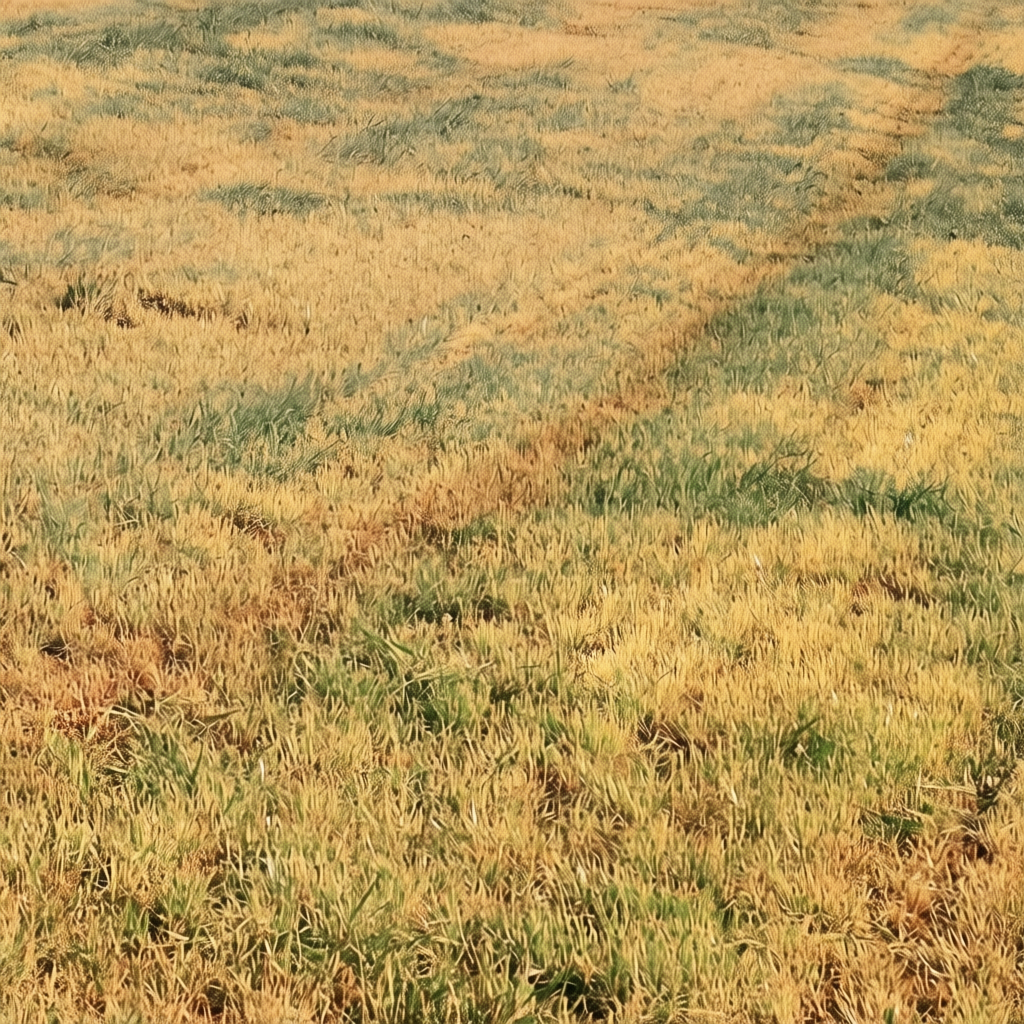
A pale lawn usually points to nutrient loss, poor soil health, or watering issues.
What’s Happening
If your lawn looks pale, yellow, or washed out instead of a deep green, it’s usually a sign that the grass isn’t getting enough nutrients or that the soil is struggling to hold them.
• Apply a balanced, slow-release fertilizer • Water deeply but less frequently • Leave grass clippings on the lawn after mowing to recycle nutrients • Aerate compacted areas if necessary
Florida Lawn Tip
Florida’s sandy soils are especially prone to nutrient loss from rainfall and irrigation, which is why consistent feeding during the growing season is vital for lawn health.
Where FloridaGreen Can Help
Slow-release fertilizers help provide steady nutrients over time, which can reduce the sudden nutrient swings that often cause yellowing.
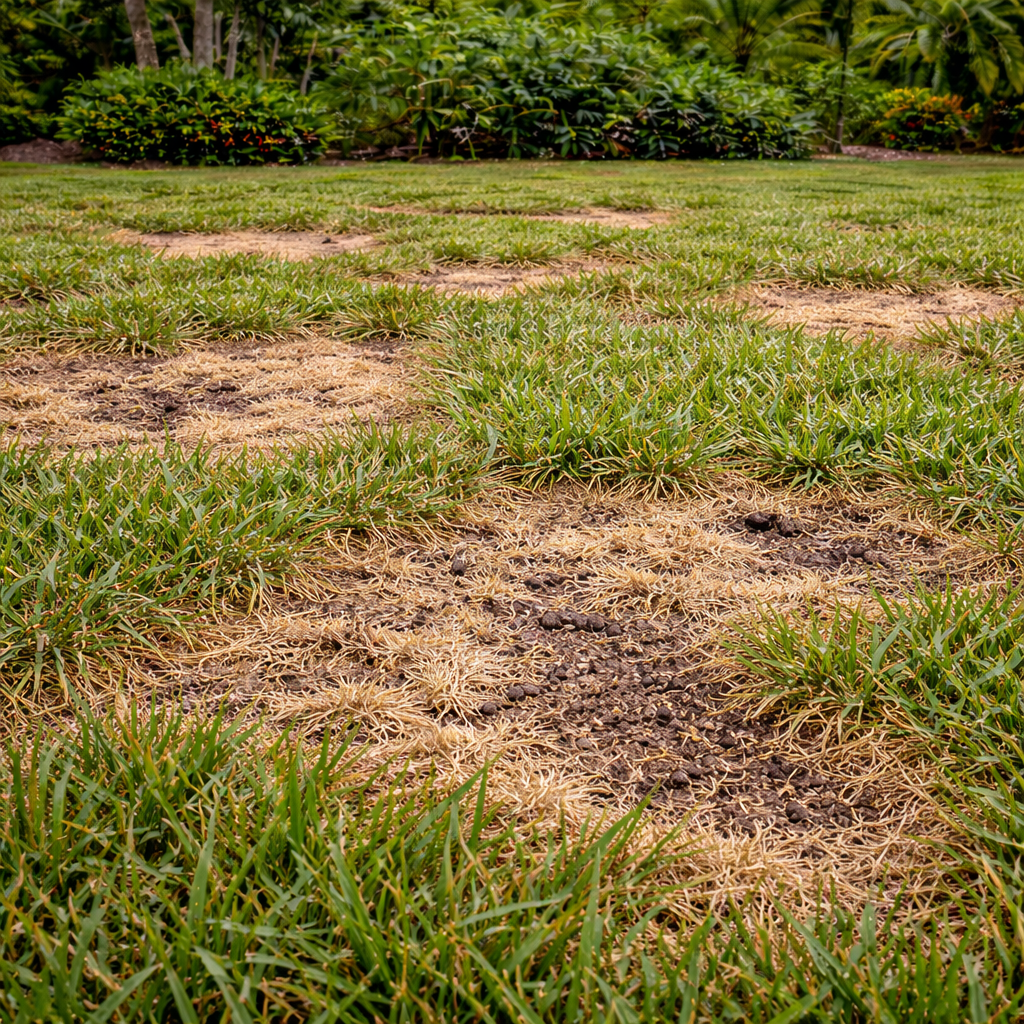
Patchy Lawn
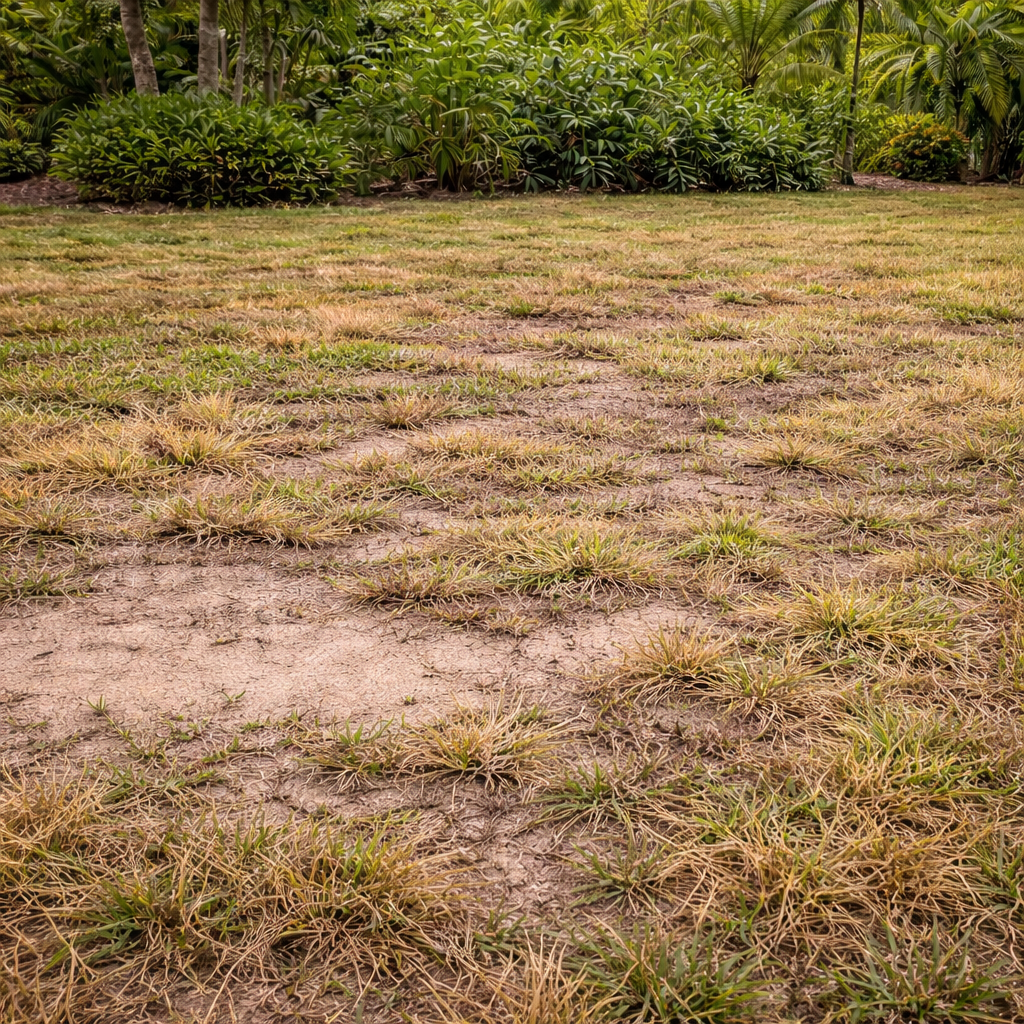
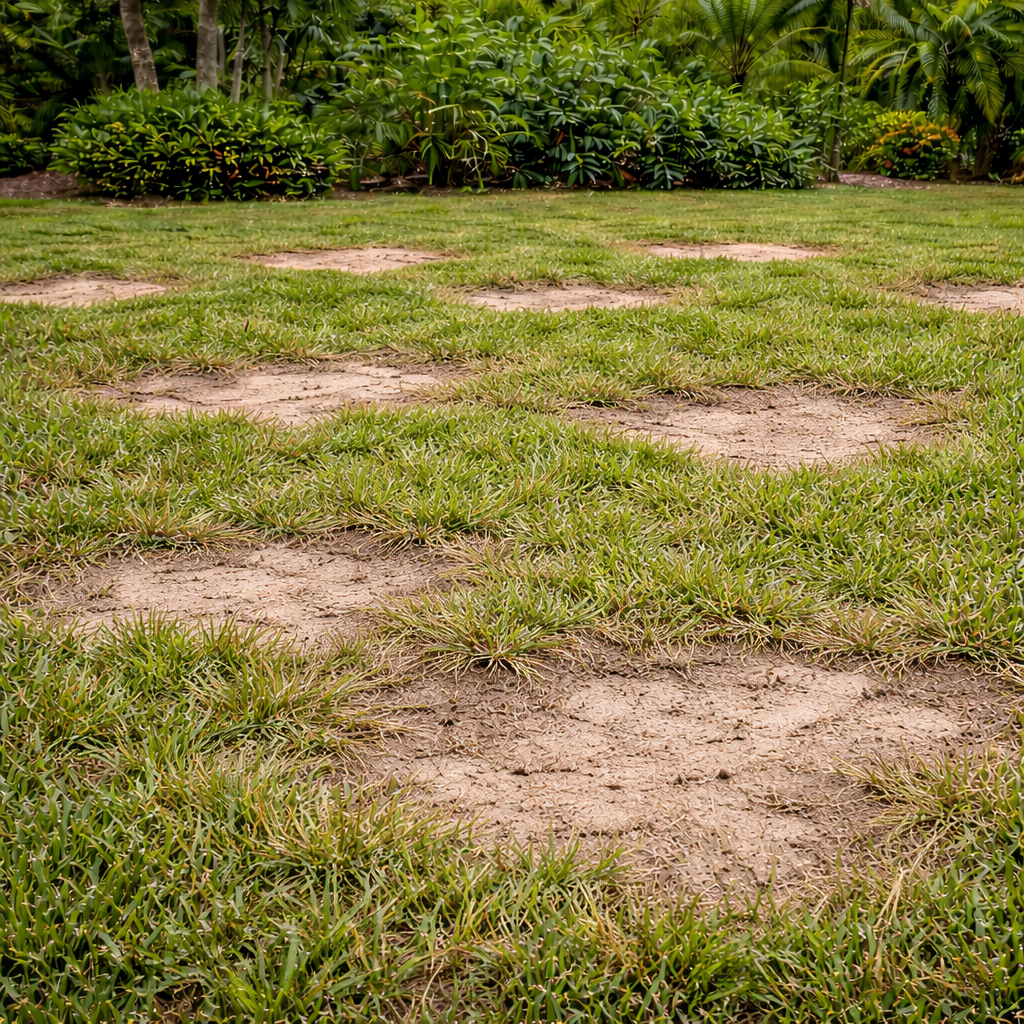
A patchy lawn is often caused by uneven growth, weak soil, or stress from traffic, shade, or pests.
What’s Happening
Patchy lawns occur when grass grows unevenly, leaving thin areas scattered throughout the yard.
Possible Causes
• Uneven fertilizer application • Shade stress • Soil nutrient imbalance • Heavy foot traffic • Pest damage
How to Fix It
• Fertilize consistently during the growing season • Improve soil health over time • Reduce traffic in weak areas • Raise mowing height slightly for St. Augustine grass • Reseed or plug damaged areas
Florida Lawn Tip
Fertilization that improves soil health can help encourage thicker turf that naturally fills patchy areas.
Where FloridaGreen Can Help
Improving soil health and providing consistent nutrients can help encourage thicker growth, allowing your lawn to naturally fill in patchy areas over time.
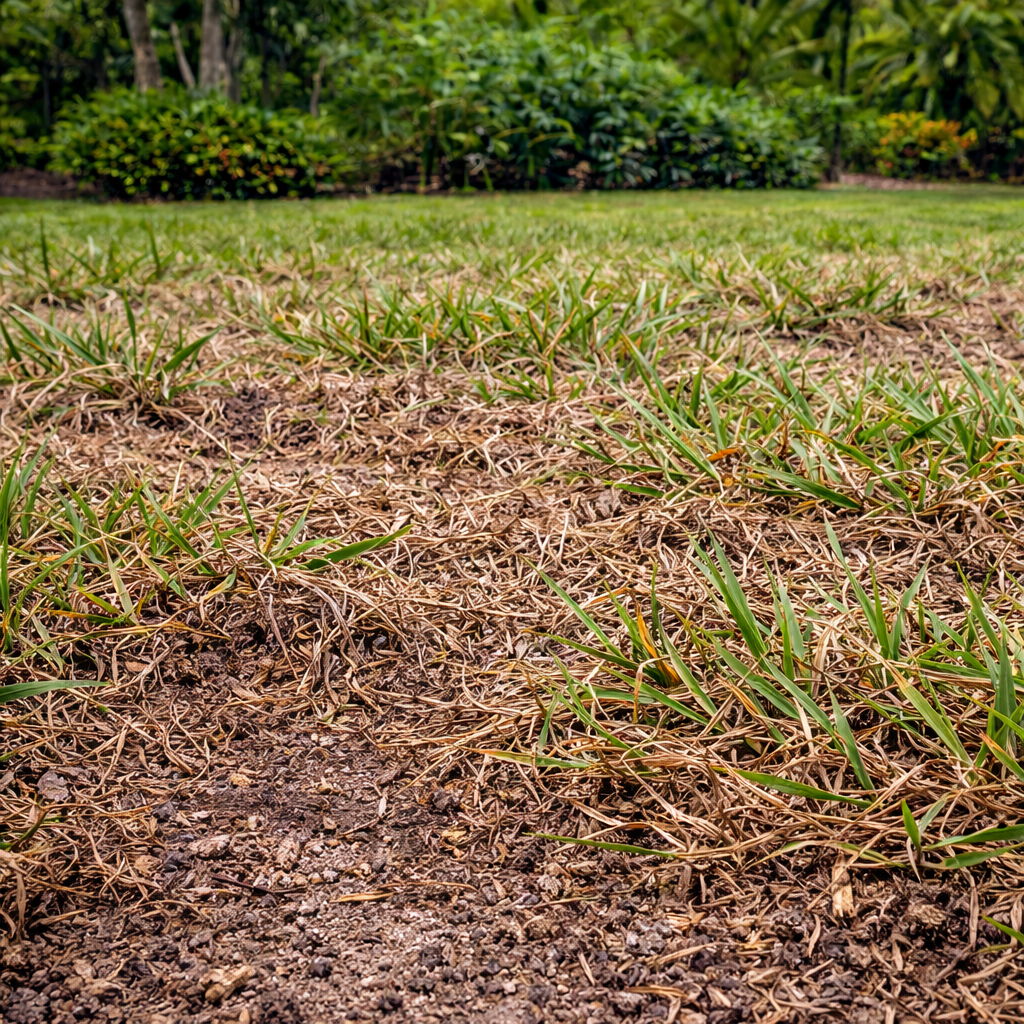
Brown Spots
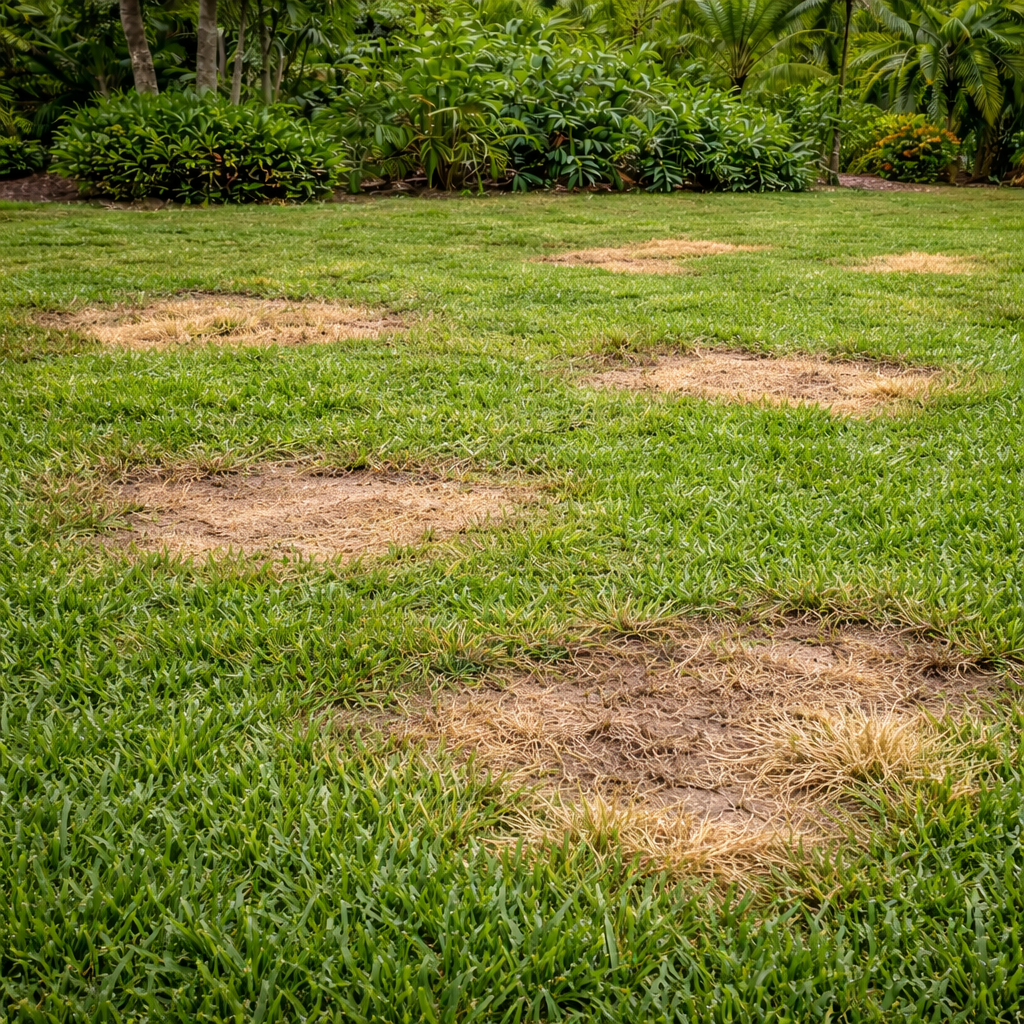
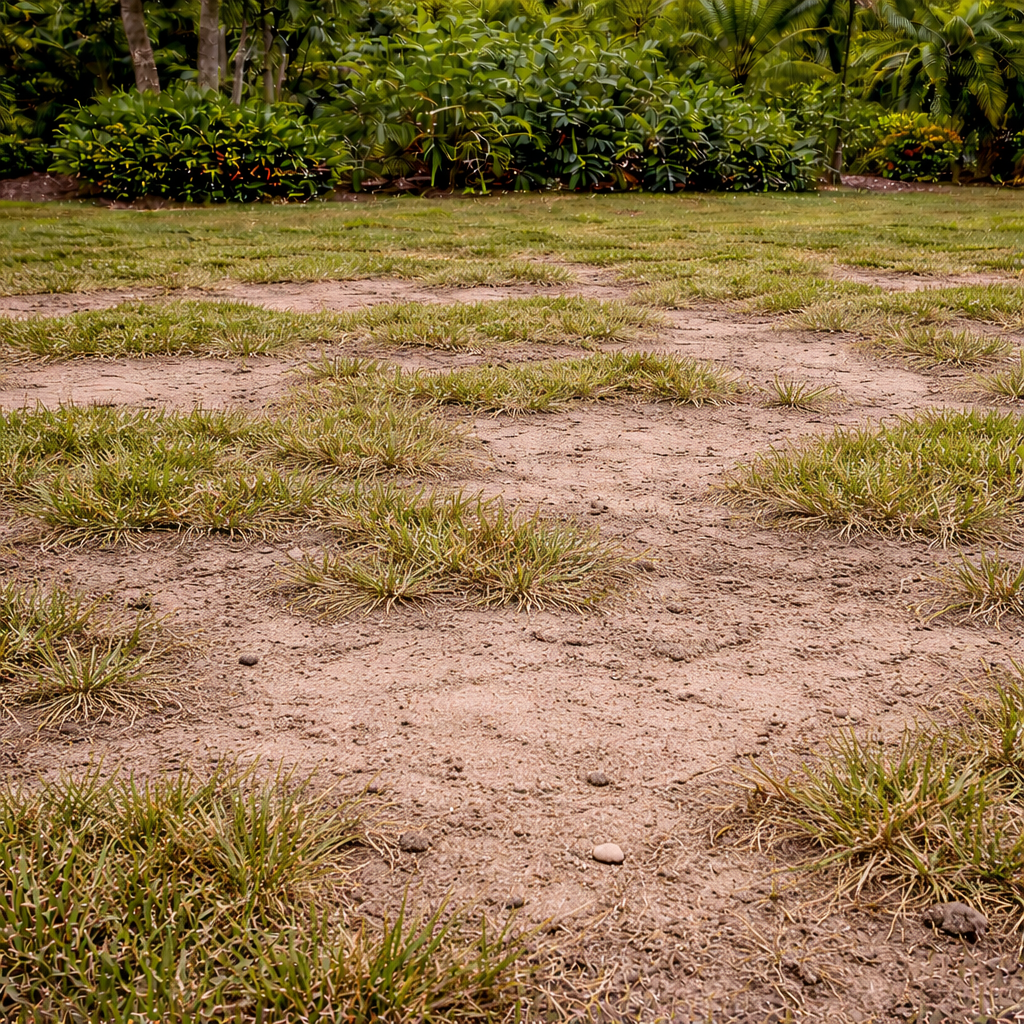
Brown spots typically signal stress from drought, disease, pests, or improper lawn care practices.
What’s Happening
Brown spots can appear suddenly and spread quickly if the underlying cause isn’t addressed.
• Identify whether the issue is drought, disease, or pests • Water deeply but avoid frequent shallow watering • Avoid excessive fertilizer application • Improve airflow and drainage
Florida Lawn Tip
Warm, humid conditions in Florida can make lawns more susceptible to fungal diseases.
Where FloridaGreen Can Help
Slow-release fertilizers reduce the risk of fertilizer burn compared to fast-release synthetic fertilizers.
Thin or Weak Grass
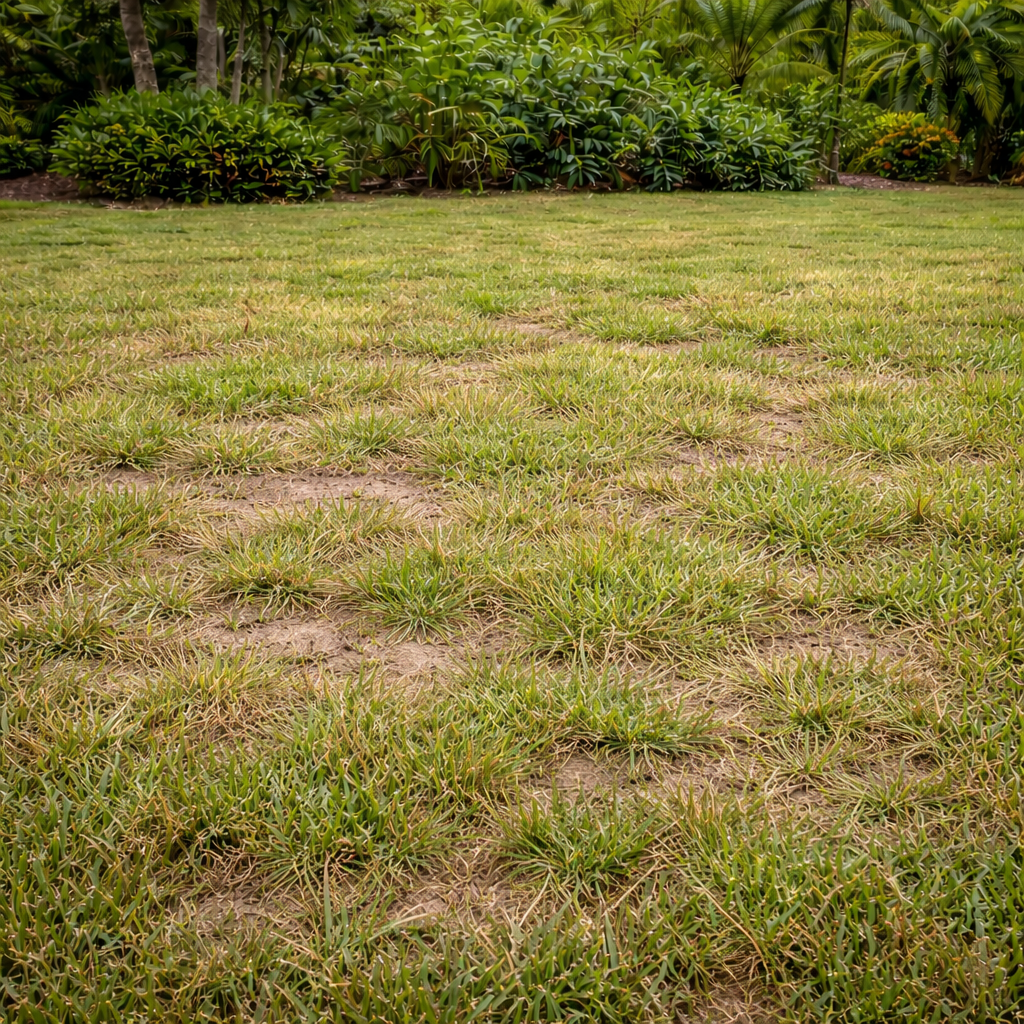
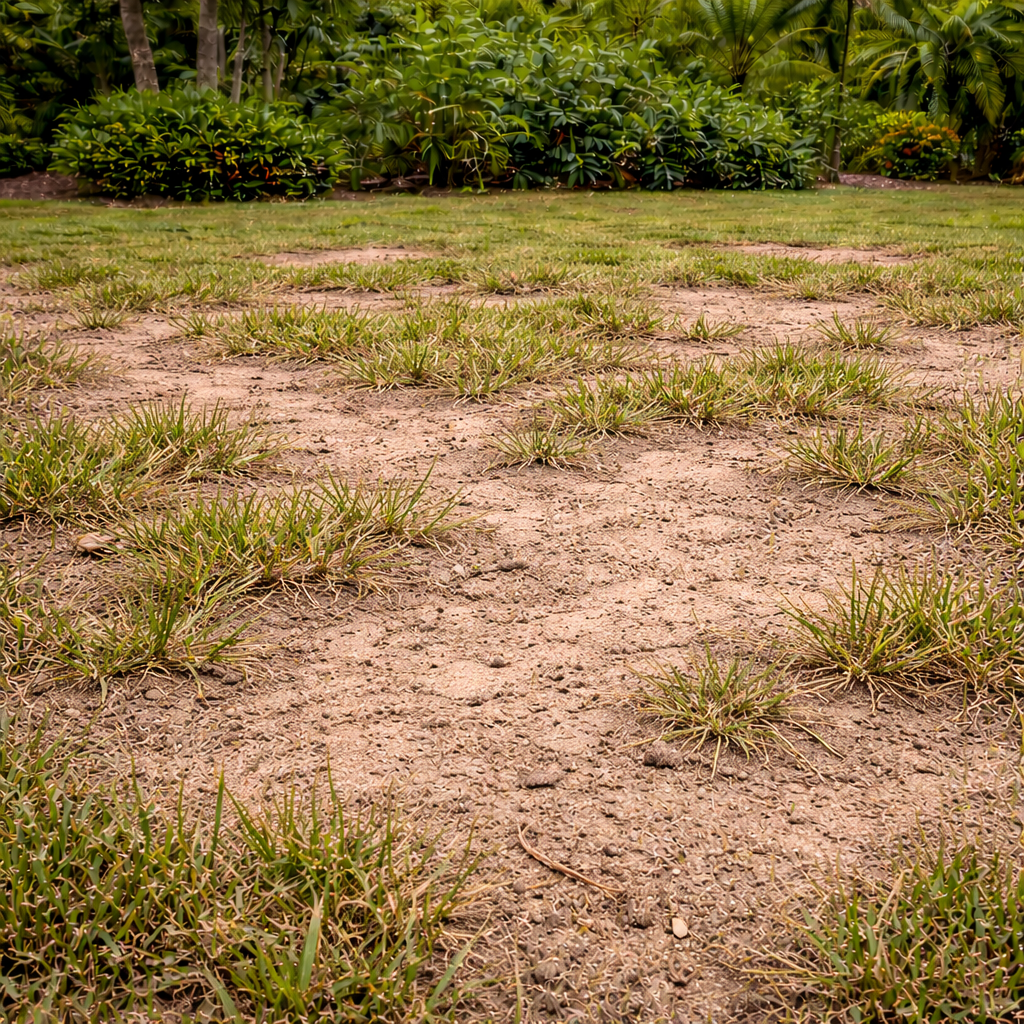
Thin grass usually means your lawn isn’t getting what it needs to grow thick, healthy, and resilient.
What’s Happening
A thin lawn allows weeds to invade and struggles to recover from stress.
• Fertilize consistently during the growing season • Aerate compacted soil • Adjust mowing height to the recommended level • Improve sunlight exposure if possible
Florida Lawn Tip
Warm-season grasses grow best when regularly fed during the active growing season.
Where FloridaGreen Can Help
Organic-based fertilizers contribute nutrients while helping improve soil structure over time.
Weeds Taking Over
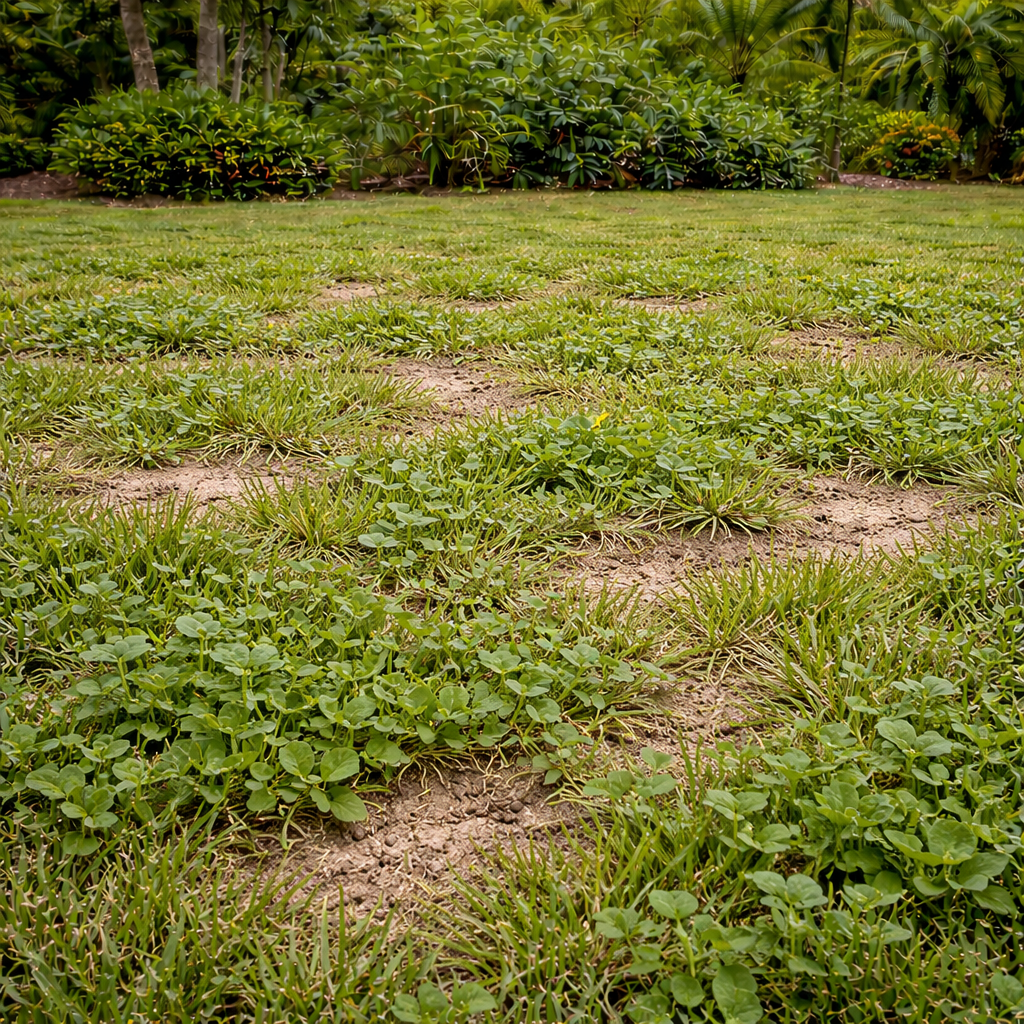
When weeds start to take over, it’s usually a sign your lawn is thin, stressed, or lacking nutrients.
What’s Happening
Weeds thrive when grass is weak or when bare soil is exposed.
• Apply fertilizer during the growing season • Aerate compacted soil • Adjust irrigation schedule • Reduce shade where possible
Florida Lawn Tip
Warm-season grasses grow most actively in late spring and summer.
Where FloridaGreen Can Help
When grass isn’t actively growing, it’s often lacking nutrients or struggling in poor soil. A steady, slow-release feeding approach can help support consistent growth during the active season.
Too Much Thatch
Excess thatch can block water and nutrients from reaching the soil, preventing healthy growth.
What’s Happening
Thatch is a layer of dead grass and organic debris between the soil and grass blades.
Possible Causes
• Overfertilization • Poor microbial activity in soil • Lack of aeration
How to Fix It
• Dethatch if the layer becomes excessive • Aerate the lawn • Improve soil health
Florida Lawn Tip
Healthy soil microbes naturally break down thatch over time.
Where FloridaGreen Can Help
Organic-based fertilizers can support microbial activity in the soil, which helps break down excess thatch naturally over time.
Fungus or Disease
Fungal issues are common in Florida and often show up as discoloration, patches, or thinning grass.
What’s Happening
Florida’s warm and humid climate can create ideal conditions for lawn diseases.
Possible Causes
• Brown patch • Dollar spot • Take-all root rot
How to Fix It
• Water early in the morning • Improve drainage • Avoid excessive nitrogen spikes • Reduce humidity around grass blades
Florida Lawn Tip
Water early in the morning so the grass has time to dry throughout the day. Avoid watering at night, as prolonged moisture creates ideal conditions for fungal growth.
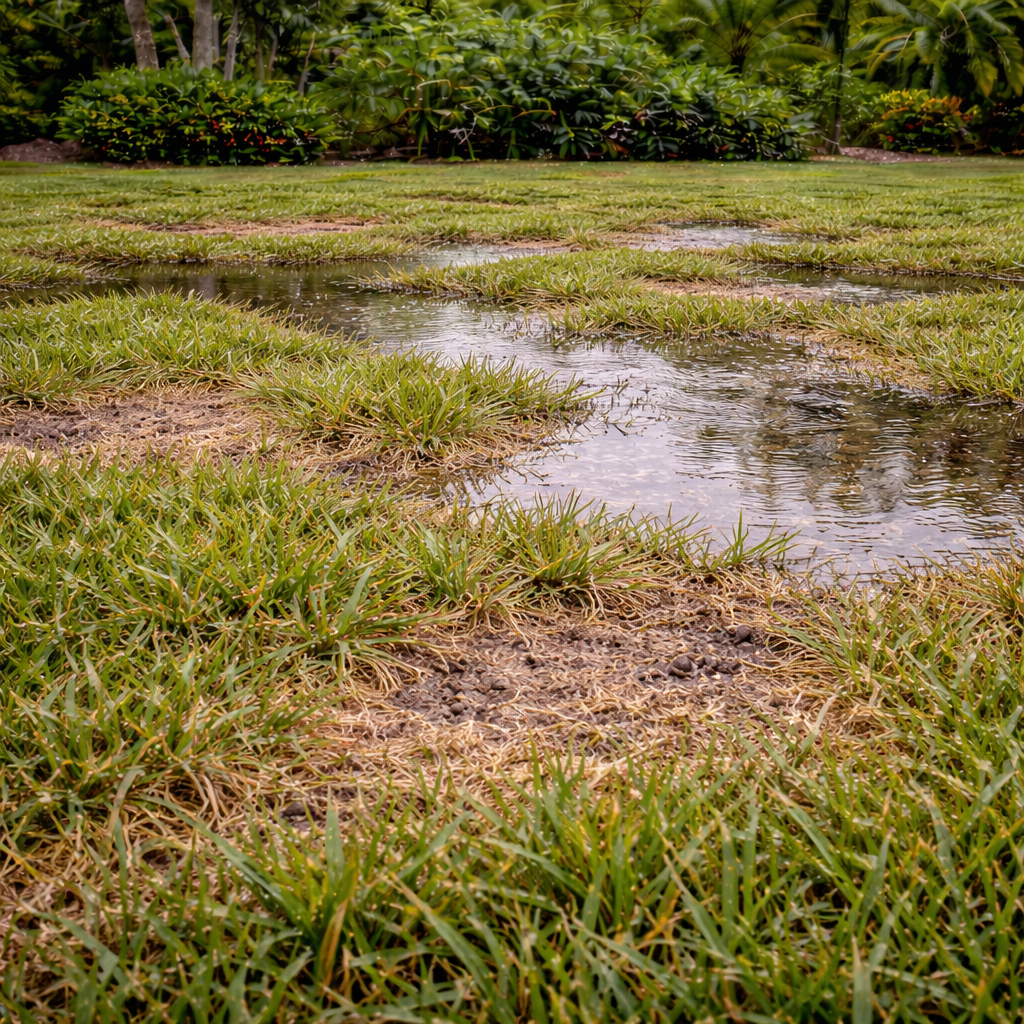
Poor Drainage
Poor drainage can lead to waterlogged soil, suffocating roots and weakening your lawn.
What’s Happening
Standing water or soggy soil can suffocate grass roots.
Possible Causes
• Compacted soil • Heavy clay pockets • Poor grading
After heavy Florida rains, watch for areas where water sits longer than a few hours. These spots often need aeration, grading, or drainage solutions to prevent long-term damage.
Insect Damage
Insect damage can quickly destroy healthy grass by feeding on roots or blades.
What’s Happening
Certain insects feed on grass roots or blades and can quickly damage a healthy lawn.
Signs of Insect Damage
• Grass pulling up easily • Irregular brown patches • Visible insects in turf
Common Florida Lawn Pests
• Chinch bugs • Grubs • Armyworms • Mole crickets
How to Fix It
• Identify the pest correctly • Apply targeted treatments if necessary • Maintain strong turf health
Florida Lawn Tip
Check your lawn regularly during warmer months by pulling lightly on the grass. If it lifts easily or you notice increased bird activity, insects may be present.
Best Lawn Practices for Florida
Mow Properly –Never remove more than 1/3 of grass blade.
Water Correctly –Water deeply 1–2 times per week.
Fertilize Consistently –Florida lawns benefit from slow steady feeding.
Build Soil Health –Healthy soil grows healthier grass.
Recommended Fertilization Schedule
"If You're Mowing, You Should Be Throwing."
During the active growing season, fertilize every 8–10 weeks to maintain consistent nutrient availability and support healthy turf growth.